

Hey there! As a supplier of Fish Meal Coolers, I often get asked some pretty interesting questions. One that pops up quite a bit is, "Can a fish meal cooler be used in a high - altitude area?" Well, let's dive right into this topic and find out.
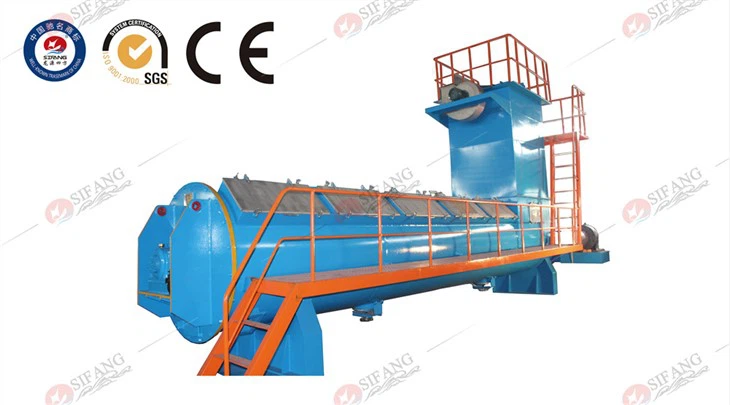
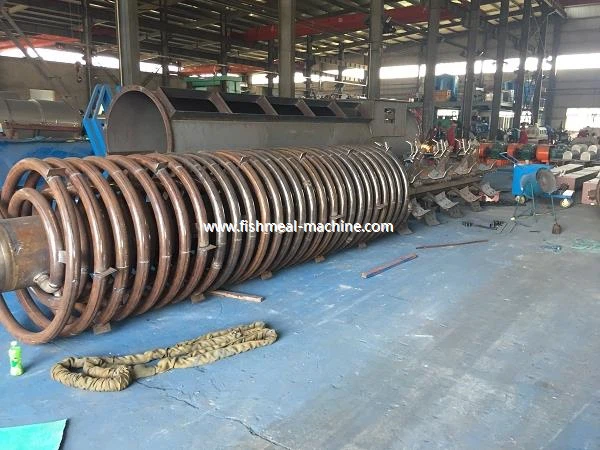
First off, let's understand what a fish meal cooler is. A Fish Meal Cooler is a crucial piece of equipment in the fish meal production process. Its main job is to lower the temperature of the fish meal after it's been cooked and dried. This helps in preserving the quality of the fish meal, preventing spoilage, and making it suitable for storage and transportation.
There are different types of fish meal coolers available. We have the Fish Meal Cooler with Water Cooling and the Fish Meal Cooler with Air Cooling. The water - cooled ones use water as a coolant, while the air - cooled ones rely on air circulation to bring down the temperature of the fish meal.
Now, let's talk about high - altitude areas. High - altitude areas are characterized by lower atmospheric pressure and lower oxygen levels compared to sea - level areas. These environmental factors can have a significant impact on how machinery and equipment operate.
Impact of High Altitude on Air - Cooled Fish Meal Coolers
For air - cooled fish meal coolers, the lower air density at high altitudes is a major concern. Air density is directly related to the amount of heat that can be transferred away from the fish meal. At high altitudes, the air is thinner, which means there are fewer air molecules available to carry away the heat.
This results in reduced cooling efficiency. The cooler might take longer to reach the desired temperature, or it might not be able to cool the fish meal to the required level at all. In some cases, the cooler may have to work harder, which can lead to increased energy consumption and more wear and tear on the components.
Another issue is the performance of the fans in the air - cooled cooler. The fans are designed to operate at a certain air density. At high altitudes, the reduced air density can cause the fans to operate less efficiently. They may not be able to move enough air through the cooling system, further hampering the cooling process.
Impact of High Altitude on Water - Cooled Fish Meal Coolers
Water - cooled fish meal coolers also face challenges in high - altitude areas. One of the main issues is the boiling point of water. As the altitude increases, the atmospheric pressure decreases, and so does the boiling point of water.
For example, at sea level, water boils at 100°C (212°F). But at an altitude of 3000 meters (about 9800 feet), water boils at around 90°C (194°F). This means that in a water - cooled cooler, the water may start to boil at a lower temperature than expected. When the water boils, it turns into steam, which can cause problems in the cooling system, such as reduced heat transfer and potential damage to the pipes and other components.
In addition, the lower oxygen levels at high altitudes can lead to corrosion in the water - cooling system. Oxygen is required for the corrosion process, but the reduced oxygen levels can actually slow down the normal corrosion - prevention mechanisms in the system. This can lead to long - term damage to the water - cooling components.
Solutions for Using Fish Meal Coolers in High - Altitude Areas
Despite these challenges, there are ways to make fish meal coolers work effectively in high - altitude areas.
For air - cooled coolers, one solution is to increase the size of the fans or use more powerful fans. This can help to compensate for the reduced air density and improve the air circulation in the cooling system. Another option is to install additional cooling fins or heat exchangers to increase the surface area for heat transfer.
In the case of water - cooled coolers, using a coolant mixture with a lower boiling point can be a good solution. For example, adding antifreeze to the water can lower the boiling point and prevent the water from boiling at the lower atmospheric pressures found at high altitudes. Regular maintenance and inspection of the water - cooling system are also crucial to detect and address any corrosion issues early on.
Case Studies
Let's take a look at a couple of real - world examples. There was a fish meal production plant in the Andes Mountains, at an altitude of around 4000 meters (about 13100 feet). They initially installed a standard air - cooled fish meal cooler. They quickly realized that the cooler was not performing well. The fish meal was not cooling down fast enough, and the energy consumption was sky - high.
After consulting with us, they decided to upgrade to a water - cooled cooler with a custom - designed coolant mixture. They also installed additional insulation around the cooling pipes to prevent heat loss. This solution worked well, and they were able to achieve the desired cooling efficiency.
Another case was a plant in the Himalayas. They had a water - cooled cooler that was experiencing problems with the water boiling too easily. By adding a proper antifreeze mixture and implementing a regular maintenance schedule, they were able to overcome the issues and keep the cooler running smoothly.
Conclusion
So, can a fish meal cooler be used in a high - altitude area? The answer is yes, but it comes with its challenges. Whether it's an air - cooled or a water - cooled cooler, the reduced atmospheric pressure and lower oxygen levels at high altitudes can affect the cooling efficiency and the overall performance of the cooler.
However, with the right modifications and maintenance, these challenges can be overcome. If you're planning to set up a fish meal production plant in a high - altitude area, it's important to work with a reliable supplier who can provide you with the right solutions.
If you're interested in purchasing a fish meal cooler or need more information on how to make it work in a high - altitude area, feel free to get in touch. We're here to help you make the best decision for your fish meal production needs.
References
- "Engineering Thermodynamics" by Cengel and Boles
- "Handbook of Industrial Cooling Systems" by various authors