

Can Tricanter Separate Different Substances?
As a supplier of Tricanters, I've had numerous inquiries about the capabilities of these remarkable machines. The question "Can Tricanter separate different substances?" is one that comes up quite frequently, and today, I'm going to delve into this topic in detail.
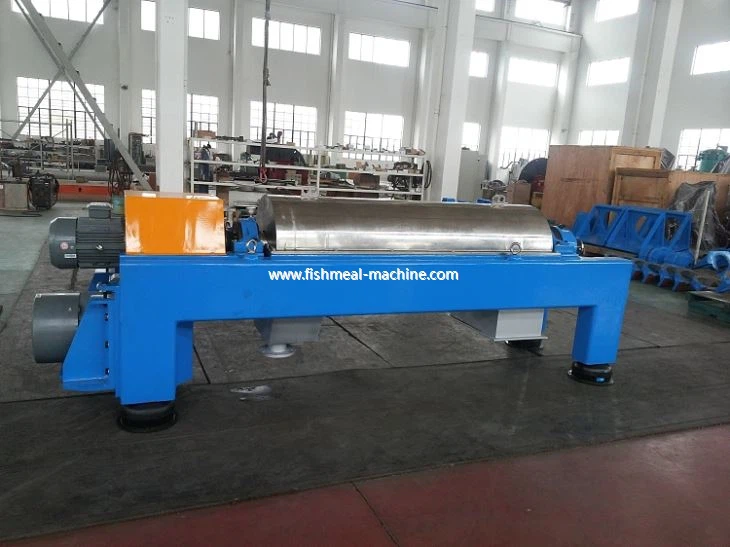
First, let's understand what a Tricanter is. A Tricanter, also known as a three - phase decanter centrifuge, is a high - performance separation device. You can learn more about it on this Tricanter page. It is designed to separate mixtures containing three different phases: a light liquid phase, a heavy liquid phase, and a solid phase. This unique ability sets it apart from traditional two - phase separators.
How Tricanters Work
The working principle of a Tricanter is based on the difference in density between the substances in the mixture. When the mixture enters the Tricanter, it is rapidly spun at high speeds. Due to the centrifugal force, the denser components are forced towards the outer wall of the centrifuge bowl, while the lighter components remain closer to the center.
The solid phase, being the densest, accumulates at the periphery of the bowl. The heavy liquid phase forms a layer adjacent to the solid phase, and the light liquid phase is located towards the center. Specialized discharge mechanisms are then used to remove each phase separately. This allows for a highly efficient and continuous separation process.
Applications of Tricanters in Different Industries
Food Industry
In the food industry, Tricanters play a crucial role in separating various substances. For example, in the production of vegetable oils, Tricanters are used to separate the oil, water, and solid impurities from the crude oil extract. The light liquid phase is the pure vegetable oil, the heavy liquid phase contains water and some soluble impurities, and the solid phase consists of insoluble particles such as seed fragments. By using a Tricanter, food manufacturers can obtain high - quality vegetable oils with minimal impurities, meeting the strict quality standards of the industry.
Chemical Industry
The chemical industry also benefits greatly from the use of Tricanters. In chemical processes, mixtures often contain multiple components that need to be separated. For instance, in the production of polymers, Tricanters can separate the polymer solution, the solvent, and any solid catalysts or by - products. This separation is essential for purifying the polymer and recovering the valuable solvent for reuse, which not only improves the quality of the final product but also reduces production costs.
Wastewater Treatment
Tricanters are widely used in wastewater treatment plants. Wastewater typically contains a mixture of water, suspended solids, and oils. The Tricanter can separate these three phases effectively. The light liquid phase is the oil, which can be recovered and potentially reused. The heavy liquid phase is the treated water, which can be further processed or discharged safely. The solid phase consists of sludge, which can be disposed of or treated for further resource recovery. This helps in reducing the environmental impact of wastewater and conserving resources.

Advantages of Using Tricanters for Separation
High Efficiency
One of the main advantages of Tricanters is their high separation efficiency. They can handle large volumes of mixtures continuously, with a high degree of separation accuracy. This means that they can separate substances quickly and effectively, reducing the overall processing time and increasing productivity.
Versatility
Tricanters are highly versatile machines. They can be used to separate a wide range of substances, regardless of their physical and chemical properties. Whether it's a mixture of organic and inorganic materials, or substances with different viscosities, a Tricanter can be adjusted to achieve the desired separation.
Low Maintenance
Compared to some other separation equipment, Tricanters require relatively low maintenance. They are designed with robust components and advanced control systems, which ensure reliable operation over long periods. This reduces downtime and maintenance costs, making them a cost - effective solution for many industries.
Limitations and Considerations
While Tricanters are extremely useful, they do have some limitations. One of the main limitations is the sensitivity to the properties of the mixture. For example, if the density difference between the phases is very small, it may be more challenging to achieve a complete separation. Additionally, the viscosity of the mixture can also affect the performance of the Tricanter. High - viscosity mixtures may require special design modifications or pre - treatment to ensure efficient separation.
Another consideration is the initial investment cost. Tricanters are relatively expensive pieces of equipment, and the cost of installation and commissioning can also be significant. However, when considering the long - term benefits in terms of increased productivity, improved product quality, and reduced operating costs, the investment in a Tricanter can be well - justified.
Conclusion
In conclusion, Tricanters are indeed capable of separating different substances effectively. Their unique three - phase separation ability makes them suitable for a wide range of applications in various industries. From the food and chemical industries to wastewater treatment, Tricanters have proven to be valuable assets in improving production processes and product quality.
If you are interested in exploring the potential of Tricanters for your specific separation needs, I encourage you to reach out for a detailed discussion. We can provide you with in - depth technical information, customized solutions, and competitive pricing. Let's work together to find the best separation solution for your business.
References
- Perry, R. H., & Green, D. W. (Eds.). (2008). Perry's Chemical Engineers' Handbook. McGraw - Hill.
- Svarovsky, L. (1990). Solid - Liquid Separation. Butterworth - Heinemann.