

Oil separators play a crucial role in various industries, from oil and gas to food processing and wastewater treatment. These devices are designed to separate oil from other substances, such as water or solids, and their effectiveness can significantly impact operational efficiency and environmental compliance. As a leading supplier of oil separators, I have witnessed firsthand the diverse range of separation methods available in the market and the unique advantages each offers. In this blog post, I will explore the differences between oil separators with different separation methods, providing insights to help you make an informed decision for your specific application.
Gravity Separation
Gravity separation is one of the oldest and most widely used methods for oil separation. It relies on the difference in density between oil and water to achieve separation. In a gravity separator, the mixture of oil and water is allowed to settle in a tank or chamber. Over time, the lighter oil rises to the surface, while the heavier water sinks to the bottom. The separated oil can then be skimmed off the top, and the water can be discharged from the bottom.
One of the main advantages of gravity separation is its simplicity and low cost. Gravity separators are relatively easy to install and operate, requiring minimal maintenance. They are also effective for separating large volumes of oil and water, making them suitable for applications such as wastewater treatment and oil refineries. However, gravity separation has its limitations. It is a relatively slow process, and it may not be effective for separating small droplets of oil or emulsified oil. In addition, gravity separators require a large footprint, which can be a challenge in space-constrained environments.
Centrifugal Separation
Centrifugal separation is another popular method for oil separation. It uses centrifugal force to separate oil from other substances. In a centrifugal separator, the mixture of oil and water is fed into a rotating drum or bowl. As the drum rotates, the centrifugal force causes the heavier water to move towards the outer wall of the drum, while the lighter oil moves towards the center. The separated oil and water are then discharged through separate outlets.
Centrifugal separation offers several advantages over gravity separation. It is a much faster process, capable of separating oil and water in a matter of seconds. It is also more effective for separating small droplets of oil and emulsified oil, making it suitable for applications such as lubricating oil purification and food processing. In addition, centrifugal separators have a smaller footprint than gravity separators, making them more suitable for space-constrained environments. However, centrifugal separation is more complex and expensive than gravity separation. It requires a power source to drive the rotating drum, and it may require more maintenance.
Coalescence Separation
Coalescence separation is a method that uses a coalescing media to separate oil from water. In a coalescence separator, the mixture of oil and water is passed through a coalescing media, such as a fibrous material or a porous membrane. As the oil droplets come into contact with the coalescing media, they adhere to the surface of the media and merge together to form larger droplets. The larger droplets then rise to the surface of the water and can be skimmed off.

Coalescence separation offers several advantages over other separation methods. It is a highly effective method for separating small droplets of oil and emulsified oil, making it suitable for applications such as wastewater treatment and oil spill cleanup. It is also a relatively simple and low-cost method, requiring minimal maintenance. In addition, coalescence separators have a small footprint, making them suitable for space-constrained environments. However, coalescence separation has its limitations. The coalescing media can become clogged over time, reducing the efficiency of the separator. It may also require periodic replacement of the coalescing media.
Tricanter Separation
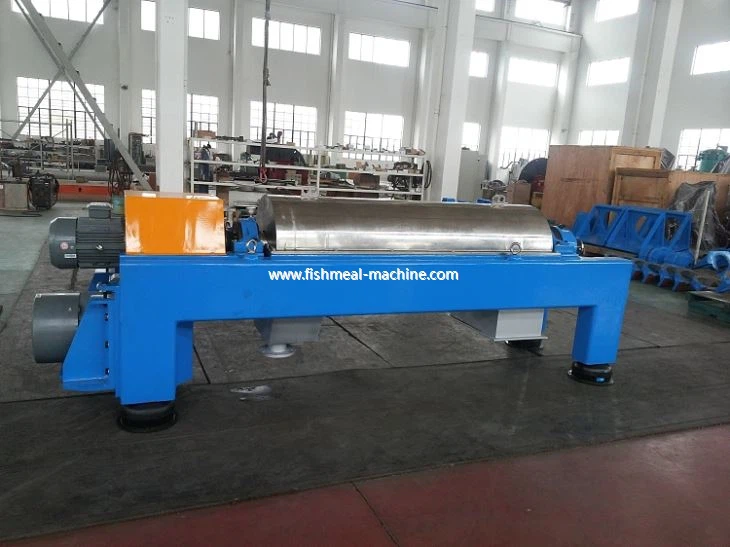
Tricanter separation is a specialized method for separating oil, water, and solids simultaneously. It uses a combination of centrifugal force and gravity to achieve separation. In a Tricanter, the mixture of oil, water, and solids is fed into a rotating drum or bowl. As the drum rotates, the centrifugal force causes the heavier solids to move towards the outer wall of the drum, while the lighter oil and water move towards the center. The separated oil, water, and solids are then discharged through separate outlets.
Tricanter separation offers several advantages over other separation methods. It is a highly efficient method for separating oil, water, and solids simultaneously, making it suitable for applications such as oil refining, food processing, and wastewater treatment. It is also a relatively fast and effective method, capable of separating large volumes of material in a short period of time. In addition, tricanter separators have a small footprint, making them suitable for space-constrained environments. However, tricanter separation is a more complex and expensive method than other separation methods. It requires a power source to drive the rotating drum, and it may require more maintenance.
Conclusion
In conclusion, there are several different methods available for oil separation, each with its own unique advantages and disadvantages. The choice of separation method depends on several factors, such as the type and concentration of the oil, the volume of the mixture, the required separation efficiency, and the available space and budget. As a supplier of oil separators, I can help you evaluate your specific requirements and recommend the most suitable separation method for your application.
If you are interested in learning more about our oil separators or would like to discuss your specific needs, please do not hesitate to contact us. Our team of experts is available to provide you with detailed information and assistance. We look forward to working with you to find the best solution for your oil separation needs.
References
- Smith, J. (2018). Oil Separation Technologies: A Review. Journal of Separation Science, 41(10), 2113-2128.
- Jones, A. (2019). Centrifugal Separation in the Oil and Gas Industry. Separation and Purification Technology, 220, 115567.
- Brown, C. (2020). Coalescence Separation: Principles and Applications. Chemical Engineering Journal, 384, 123301.
- Green, D. (2021). Tricanter Separation: A Comprehensive Guide. Separation Science and Technology, 56(12), 1935-1946.