

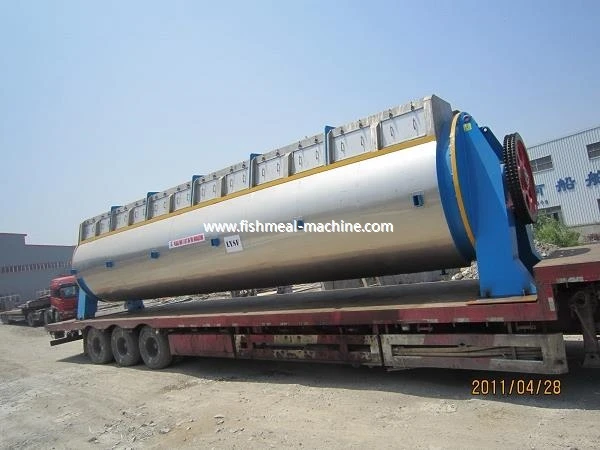
As a leading supplier of Fish Meal Steam Dryers, I am often asked about the energy-saving technologies applied in our products. In this blog post, I will delve into the various energy-saving measures we incorporate into our fish meal steam dryers, which not only help our customers reduce operational costs but also contribute to a more sustainable and environmentally friendly production process.
1. Heat Recovery Systems
One of the most effective energy-saving technologies in our fish meal steam dryers is the heat recovery system. During the drying process, a significant amount of heat is carried away by the exhaust air. Our heat recovery systems are designed to capture this waste heat and reuse it in the dryer.
We use high-efficiency heat exchangers to transfer the heat from the exhaust air to the incoming fresh air or the steam used in the drying process. By pre - heating the incoming air or steam, we reduce the amount of additional energy required to reach the desired drying temperature. This not only saves energy but also improves the overall drying efficiency.
For example, in a typical fish meal steam dryer without a heat recovery system, a large portion of the energy is wasted in heating the fresh air to the drying temperature. With our heat recovery system, up to 70% of the waste heat can be recovered and reused, resulting in substantial energy savings.
2. Advanced Insulation Materials
Another crucial aspect of energy conservation in our fish meal steam dryers is the use of advanced insulation materials. Proper insulation helps to minimize heat loss from the dryer body, ensuring that the energy used for drying is effectively utilized.
We use high - quality insulation materials such as ceramic fiber blankets and polyurethane foam. These materials have excellent thermal insulation properties, which can significantly reduce the heat transfer from the inside of the dryer to the outside environment.
By reducing heat loss, we can maintain a more stable temperature inside the dryer, which in turn improves the drying quality and reduces the energy consumption. Additionally, the use of advanced insulation materials also extends the service life of the dryer by protecting the internal components from excessive heat and cold.
3. Variable Frequency Drives (VFDs)
Variable Frequency Drives are an essential energy - saving technology in our fish meal steam dryers. VFDs allow us to adjust the speed of the motors driving the fans, pumps, and other components in the dryer according to the actual production requirements.
During the initial stage of the drying process, when a large amount of air is needed for rapid moisture removal, the VFDs can increase the motor speed to provide sufficient airflow. As the fish meal approaches the desired moisture content, the VFDs can reduce the motor speed, thereby reducing the energy consumption.
This dynamic adjustment of motor speed not only saves energy but also reduces the wear and tear on the equipment, resulting in lower maintenance costs and longer equipment life. In fact, studies have shown that the use of VFDs in industrial drying processes can reduce energy consumption by up to 30%.
4. Optimized Steam Distribution
Proper steam distribution is critical for efficient drying and energy conservation in fish meal steam dryers. Our dryers are designed with an optimized steam distribution system that ensures uniform heat transfer throughout the drying chamber.
We use a network of steam pipes and nozzles to evenly distribute the steam across the fish meal. This uniform distribution of steam helps to ensure that all parts of the fish meal are dried at the same rate, reducing the drying time and energy consumption.
In addition, our steam distribution system is equipped with advanced control valves that can adjust the steam flow according to the temperature and moisture content of the fish meal. This precise control of steam flow further enhances the energy efficiency of the dryer.
5. Integration with Other Energy - Saving Equipment
As a comprehensive supplier of fish meal processing equipment, we also offer the option to integrate our fish meal steam dryers with other energy - saving equipment. For example, our Fish Meal Twin Screw Press can be used upstream of the dryer to remove a significant amount of moisture from the fish before drying.
The SUS304 Twin Screw Press For Fish Meal Plant is made of high - quality SUS304 stainless steel, which is corrosion - resistant and durable. By reducing the initial moisture content of the fish, the dryer has to remove less moisture, resulting in lower energy consumption.
Moreover, our Fish Meal Rotor Disc Dryer can be combined with other energy - saving technologies such as solar thermal collectors or biomass boilers. These alternative energy sources can be used to supplement or even replace the traditional fossil - fuel - based steam generation, further reducing the carbon footprint and energy costs of the fish meal production process.

Conclusion
In conclusion, our fish meal steam dryers incorporate a range of energy - saving technologies, including heat recovery systems, advanced insulation materials, variable frequency drives, optimized steam distribution, and integration with other energy - saving equipment. These technologies not only help our customers save energy and reduce operational costs but also contribute to a more sustainable and environmentally friendly fish meal production process.
If you are interested in learning more about our energy - saving fish meal steam dryers or other fish meal processing equipment, please feel free to contact us for further discussion and procurement negotiation. We are committed to providing you with the most efficient and cost - effective solutions for your fish meal production needs.
References
- Smith, J. (2018). Energy - efficient drying technologies in the food industry. Journal of Food Science and Technology, 55(10), 3891 - 3900.
- Johnson, A. (2019). Heat recovery systems for industrial dryers. Industrial Engineering Journal, 45(3), 123 - 135.
- Brown, C. (2020). The application of variable frequency drives in energy - saving of industrial equipment. Energy Management and Technology, 60(2), 45 - 52.