

Hey there! I'm a supplier of Tricanters, and today I wanna have a chat with you about the operating pressure range of these nifty machines.
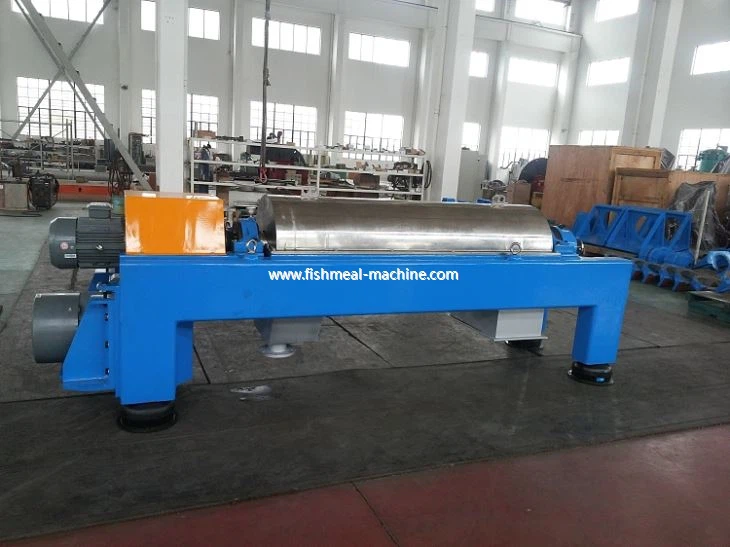
First off, let's get a basic understanding of what a Tricanter is. A Tricanter is a kind of centrifuge that can separate three different phases – typically a solid phase and two immiscible liquid phases. It's used in a bunch of industries, like food processing, chemical manufacturing, and wastewater treatment. You can find out more about Tricanters on this Tricanter page.
Now, onto the operating pressure range. The operating pressure of a Tricanter is super important as it directly affects how well it can separate the different phases. But it's not a one - size - fits - all kind of deal. The ideal pressure range depends on several factors.
One of the main factors is the nature of the materials being separated. If you're dealing with a mixture that has high - viscosity liquids or large solid particles, you'll probably need a higher operating pressure. For instance, in the food industry, when separating oil, water, and solids from olive oil production, the high - viscosity of the olive oil might require a relatively high pressure to ensure proper separation. On the other hand, if you're separating lighter, low - viscosity liquids, a lower pressure could do the job just fine.
Another factor is the design and capacity of the Tricanter itself. Different models are built to handle different pressure levels. Some smaller, more compact Tricanters might have a lower maximum operating pressure compared to larger, industrial - scale ones. The internal components, like the bowl and the conveyor, also play a role. A well - designed Tricanter with high - quality components can withstand higher pressures and operate more efficiently.
Typically, the operating pressure range of a Tricanter can vary quite a bit. In general, it can start from around 0.5 bar and go up to about 6 bar. But again, this is just a rough estimate. For some specialized applications, you might find Tricanters that can operate at even higher pressures, up to 10 bar or more.
Let's dig a bit deeper into the implications of different pressure levels. At the lower end of the pressure range (around 0.5 - 1 bar), the separation process might be slower. The centripetal force generated by the rotation of the Tricanter is relatively weak, so it takes more time for the different phases to separate. This can be okay for small - scale operations or when the materials are easy to separate. For example, in a small laboratory setting where you're doing some basic separation experiments, a lower pressure might be sufficient.
As the pressure increases, say to around 2 - 4 bar, the separation becomes more efficient. The centripetal force is stronger, which means the solid particles settle faster, and the two liquid phases separate more clearly. This is the sweet spot for many industrial applications. It allows for a good balance between separation speed and energy consumption.
When the pressure gets above 4 bar, the separation can be extremely fast. However, there are some drawbacks. Higher pressures mean more stress on the Tricanter's components. This can lead to increased wear and tear, and you might need to do more frequent maintenance. Also, operating at very high pressures requires more energy, which can drive up the operating costs.
It's also important to note that maintaining a stable operating pressure is crucial. Fluctuations in pressure can cause inconsistent separation results. If the pressure suddenly drops, the separation efficiency might decrease, and you could end up with a less - than - perfect separation. On the other hand, a sudden spike in pressure could damage the Tricanter.
To control the operating pressure, most Tricanters come with pressure - regulating systems. These systems can adjust the pressure based on the input from sensors that monitor the process. This helps to keep the pressure within the desired range and ensures a consistent separation quality.
In some cases, you might need to do some trial - and - error to find the optimal operating pressure for your specific application. You can start with a lower pressure and gradually increase it while monitoring the separation results. Look at factors like the clarity of the separated liquids, the amount of solids removed, and the overall throughput.
Now, if you're in the market for a Tricanter, you're probably wondering how to choose the right one based on the operating pressure range. First, think about your application. What kind of materials are you separating? How much throughput do you need? If you're dealing with tough - to - separate materials or need a high throughput, you'll want a Tricanter that can handle higher pressures.
Second, consider your budget. Tricanters that can operate at higher pressures usually come with a higher price tag. You also need to factor in the long - term operating costs, including energy consumption and maintenance.
If you have any questions about the operating pressure range of Tricanters or need help choosing the right model for your needs, don't hesitate to reach out. I'm here to help you make an informed decision. Whether you're a small business owner looking for a compact Tricanter or an industrial giant in need of a high - capacity one, I can provide you with all the information you need.
Contact me for a detailed discussion about your requirements, and we can start the process of finding the perfect Tricanter for you. Let's work together to improve your separation processes and boost your productivity.
References

- General knowledge of centrifuge technology and Tricanter operation
- Industry reports on the use of Tricanters in various sectors