

In the fish meal production process, cooling is a crucial step that directly impacts the quality and shelf - life of the final product. As a professional Fish Meal Cooler supplier, I am delighted to share insights into the various types of fish meal coolers available in the market.
1. Introduction to Fish Meal Cooling
Fish meal is typically produced at high temperatures during the cooking and drying processes. If the hot fish meal is not cooled properly, it can lead to several issues. Firstly, the high temperature can cause the oxidation of fats in the fish meal, resulting in a shorter shelf - life and a decrease in nutritional value. Secondly, hot fish meal can attract pests and promote the growth of microorganisms, which is a serious concern for food safety. Therefore, an efficient fish meal cooler is essential for maintaining the quality of fish meal.
2. Types of Fish Meal Coolers
2.1 Fish Meal Cooler with Water Cooling
The Fish Meal Cooler with Water Cooling is a popular option known for its high cooling efficiency. This type of cooler uses water as the cooling medium. The basic principle behind it is the transfer of heat from the hot fish meal to the water.
In a water - cooled fish meal cooler, there are usually a series of pipes or channels through which water flows. The hot fish meal is in contact with these pipes or channels, and the heat is dissipated into the water. The water then carries the heat away from the cooler, either to a cooling tower or a heat exchanger for further treatment.
One of the main advantages of a water - cooled fish meal cooler is its ability to achieve a relatively low final temperature of the fish meal. Water has a high specific heat capacity, which means it can absorb a large amount of heat without a significant increase in temperature. This allows for precise control of the cooling process, ensuring that the fish meal is cooled to the desired temperature.
However, there are also some drawbacks. Water - cooled systems require a reliable water supply, and in areas where water is scarce, this can be a problem. Additionally, the maintenance of the water - cooling system can be more complex, as there is a risk of scale formation and corrosion in the pipes and channels.
2.2 Fish Meal Cooler with Air Cooling
The Fish Meal Cooler with Air Cooling is another common type of cooler. As the name suggests, it uses air as the cooling medium.
In an air - cooled fish meal cooler, fans are used to blow ambient air over the hot fish meal. The heat from the fish meal is transferred to the air, and the warm air is then exhausted from the cooler. This type of cooler is relatively simple in design and operation.
One of the key advantages of an air - cooled fish meal cooler is its low water consumption. It is a more environmentally friendly option, especially in regions where water resources are limited. Moreover, the installation and maintenance of an air - cooled system are generally less complicated compared to a water - cooled system.
However, air - cooled coolers have some limitations. The cooling efficiency is often lower than that of water - cooled coolers, especially in hot and humid environments. The final temperature of the fish meal may not be as low as that achieved with a water - cooled system, which can be a concern for some high - quality fish meal production requirements.
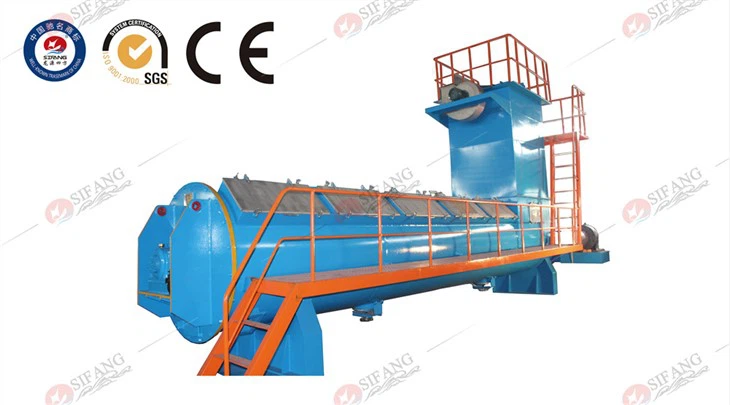

2.3 Fish Meal Cooler with Water and Air Cooling
The Fish Meal Cooler that combines both water and air cooling is a hybrid solution that aims to take advantage of the benefits of both cooling methods while minimizing their drawbacks.
This type of cooler typically has an initial stage of water cooling to rapidly reduce the temperature of the hot fish meal. Then, in the second stage, air cooling is used to further fine - tune the temperature and remove any remaining heat.
The combination of water and air cooling provides a more efficient and flexible cooling process. It can achieve a lower final temperature compared to an air - cooled system while reducing the water consumption compared to a fully water - cooled system. This makes it a suitable choice for large - scale fish meal production facilities where both high - quality cooling and cost - effectiveness are important.
3. Factors to Consider When Choosing a Fish Meal Cooler
3.1 Cooling Capacity
The cooling capacity of a fish meal cooler is determined by the amount of heat it can remove from the fish meal per unit of time. It is crucial to choose a cooler with a sufficient cooling capacity to meet the production requirements. Factors such as the production rate of the fish meal, the initial temperature of the fish meal, and the desired final temperature all need to be considered when calculating the required cooling capacity.
3.2 Energy Efficiency
Energy consumption is an important cost factor in fish meal production. Different types of fish meal coolers have different energy requirements. Water - cooled coolers may require pumps to circulate water, while air - cooled coolers need fans to blow air. It is advisable to choose a cooler that offers a good balance between cooling performance and energy efficiency.
3.3 Space Requirements
The available space in the fish meal production facility is another important consideration. Some coolers, especially large - scale water - cooled systems, may require a significant amount of floor space and additional infrastructure such as water storage tanks and cooling towers. On the other hand, air - cooled coolers are generally more compact and can be installed in smaller spaces.
3.4 Maintenance and Reliability
A reliable fish meal cooler is essential for continuous production. Regular maintenance is required to ensure the proper functioning of the cooler. When choosing a cooler, it is important to consider the ease of maintenance, the availability of spare parts, and the reputation of the manufacturer.
4. Why Choose Our Fish Meal Coolers
As a leading Fish Meal Cooler supplier, we offer a wide range of high - quality fish meal coolers, including water - cooled, air - cooled, and combined water - and - air - cooled models. Our coolers are designed with the latest technology to ensure maximum cooling efficiency and reliability.
We understand the specific needs of the fish meal industry and can provide customized solutions based on your production requirements. Our team of experts will work closely with you to select the most suitable cooler for your facility, taking into account factors such as cooling capacity, energy efficiency, and space constraints.
In addition, we offer comprehensive after - sales service, including installation, maintenance, and technical support. We are committed to providing our customers with the best possible experience and ensuring the long - term success of their fish meal production operations.
5. Conclusion
In conclusion, there are several types of fish meal coolers available, each with its own advantages and disadvantages. The choice of a fish meal cooler depends on various factors such as cooling requirements, energy efficiency, space availability, and budget. As a professional Fish Meal Cooler supplier, we are here to help you make an informed decision and provide you with the best cooling solution for your fish meal production.
If you are interested in our fish meal coolers or have any questions about the cooling process, please do not hesitate to contact us for a detailed consultation. We look forward to the opportunity to work with you and contribute to the success of your fish meal production business.
References
- Handbook of Fish Meal Processing Technology
- Journal of Aquaculture Engineering and Technology