

Hey there! As a supplier of Fish Meal Coolers, I've been getting a lot of questions lately about how the size of these coolers affects their performance. So, I thought I'd dive deep into this topic and share some insights with you all.
First off, let's talk about what a fish meal cooler is and why size matters. A fish meal cooler is a crucial piece of equipment in the fish meal production process. Its main job is to cool down the hot fish meal coming out of the dryer to a temperature that's suitable for storage and further processing. And the size of the cooler can have a huge impact on how well it does this job.

Capacity and Throughput
One of the most obvious ways size affects performance is in terms of capacity and throughput. A larger fish meal cooler can handle a greater volume of fish meal at once. This means that if you have a high - volume fish meal production line, a bigger cooler is going to be your best bet. For example, if you're running a large - scale commercial fish meal plant, you'll need a cooler that can keep up with the continuous flow of hot fish meal. A small cooler in this situation would quickly become overwhelmed, leading to bottlenecks in the production process.
On the other hand, if you have a small - scale operation, a large cooler might be overkill. It could be more expensive to purchase and operate, and it might not be utilized to its full potential. So, it's important to match the size of the cooler to your production needs.
Cooling Efficiency
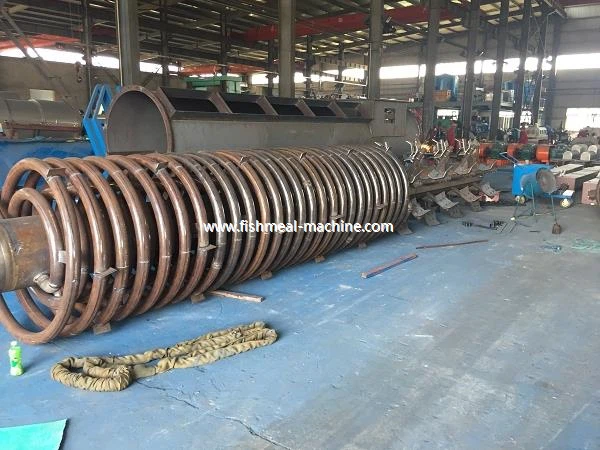
The size of the cooler also plays a role in cooling efficiency. A larger cooler generally has more surface area for heat exchange. This means that it can transfer heat from the fish meal to the cooling medium (either water or air) more effectively.
Let's take a look at the two main types of fish meal coolers: Fish Meal Cooler with Water Cooling and Fish Meal Cooler with Air Cooling. In a water - cooled cooler, a larger size allows for more water to circulate around the fish meal, absorbing heat more efficiently. Similarly, in an air - cooled cooler, a bigger unit can have more fans or a larger air duct system, enabling better air circulation and heat dissipation.
However, it's not just about having a big cooler. The design of the cooler also matters. A well - designed smaller cooler can sometimes outperform a poorly designed larger one. For instance, if the internal baffles in a larger cooler don't direct the fish meal or the cooling medium properly, the cooling efficiency can be compromised.
Energy Consumption
Energy consumption is another important factor affected by the size of the fish meal cooler. Generally, a larger cooler will consume more energy. This is because it has to power larger pumps (in the case of water - cooled coolers) or more fans (in the case of air - cooled coolers). But here's the thing: if a larger cooler can handle your production volume more efficiently, it might actually save you money in the long run.
For example, if a small cooler can't keep up with your production, you might have to run your production line at a slower pace, which can lead to increased labor costs and lower overall productivity. In contrast, a larger cooler can keep the production line running smoothly, offsetting the higher energy costs.
Maintenance and Durability
The size of the cooler can also impact maintenance and durability. A larger cooler usually has more components, which means there are more parts that could potentially break down. However, many larger coolers are built with heavy - duty materials and more robust construction to handle the higher workload.
When it comes to maintenance, a larger cooler might require more time and effort to clean and service. But on the bright side, because of its larger size, it might be easier to access and replace parts.
Cost - Benefit Analysis
So, how do you decide which size of fish meal cooler is right for you? It all comes down to a cost - benefit analysis. You need to consider your production volume, your budget for purchase and operation, and your long - term goals.
If you're just starting out with a small fish meal production business, a smaller cooler might be the most cost - effective option. You can always upgrade to a larger one as your business grows. But if you're already in a high - volume production situation, investing in a larger Fish Meal Cooler is likely to be a smart move.
Conclusion
In conclusion, the size of a fish meal cooler has a significant impact on its performance in terms of capacity, cooling efficiency, energy consumption, maintenance, and cost. There's no one - size - fits - all answer, and you need to carefully evaluate your specific needs before making a decision.
If you're still unsure about which size of fish meal cooler is right for your operation, don't hesitate to reach out. We're here to help you find the perfect solution for your fish meal production needs. Whether you have questions about the different types of coolers or need advice on sizing, our team of experts is ready to assist you. Let's work together to optimize your fish meal production process!
References
- "Fish Meal Processing Technology" - A comprehensive guide on fish meal production and related equipment.
- Industry reports on fish meal production and equipment performance.