

Hey there! I'm a supplier of Fish Meal Steam Cookers, and today I want to dig into a super interesting topic: What is the effect of steam flow pattern on the fish meal cooking quality?
Let's start by understanding what fish meal is. Fish meal is a valuable product made from fish or fish by - products. It's widely used in animal feed because of its high protein content. And the cooking process is a crucial step in making high - quality fish meal. Steam is often used in this process, and the way the steam flows can really make a difference.

Types of Steam Flow Patterns
There are mainly two types of steam flow patterns we usually deal with: laminar flow and turbulent flow.
Laminar flow is like a calm river. The steam moves in smooth, parallel layers. In this flow pattern, the steam moves steadily and predictably. It's great for gentle cooking. When the steam has a laminar flow in our Fish Meal Steam Cooker, it can provide a consistent heat source. This means that the fish is heated evenly, and we can avoid over - cooking some parts while under - cooking others.
On the other hand, turbulent flow is more like a wild rapids. The steam moves in a chaotic and irregular way. It has a lot of mixing and swirling. Turbulent flow can transfer heat much faster than laminar flow. In the context of fish meal cooking, this can be beneficial when we need to quickly raise the temperature of the fish. But it also has its drawbacks. The chaotic movement might cause some parts of the fish to be exposed to too much heat, leading to uneven cooking.
Impact on Cooking Quality
Nutritional Value
The steam flow pattern can have a big impact on the nutritional value of the fish meal. When we use a laminar flow, the slow and even heating helps to preserve the nutrients in the fish. Proteins, vitamins, and minerals are less likely to be damaged. For example, some heat - sensitive vitamins like vitamin C and B - complex can be retained better in a laminar flow cooking environment.
In contrast, a turbulent flow with its high - speed heat transfer might break down some of these nutrients. The intense heat can denature proteins in an uncontrolled way, reducing their biological availability. So, if we're aiming for a high - quality fish meal with maximum nutritional value, we need to carefully consider the steam flow pattern.
Texture
Texture is another important aspect of fish meal quality. A laminar flow gives us a more consistent texture. The fish is cooked gently, and the resulting meal has a fine and uniform texture. This is ideal for applications where a smooth texture is required, like in some high - end animal feeds.
Turbulent flow, however, can create a more uneven texture. Some parts of the fish might get over - cooked and become dry and hard, while other parts remain under - cooked. This can affect the palatability of the fish meal. Animals might be less likely to eat fish meal with an inconsistent texture, which is a big no - no for feed manufacturers.
Moisture Content
Proper moisture content is crucial for the storage and quality of fish meal. Laminar flow allows for a more controlled release of moisture from the fish. We can gradually reduce the moisture content to the desired level without creating dry spots.
Turbulent flow can cause rapid moisture loss in some areas, leading to uneven moisture distribution. This can result in some parts of the fish meal being too dry and brittle, while others are still too moist. Uneven moisture content can lead to spoilage during storage, as the moist areas are more prone to mold growth.
Our Fish Meal Steam Cooker and Steam Flow
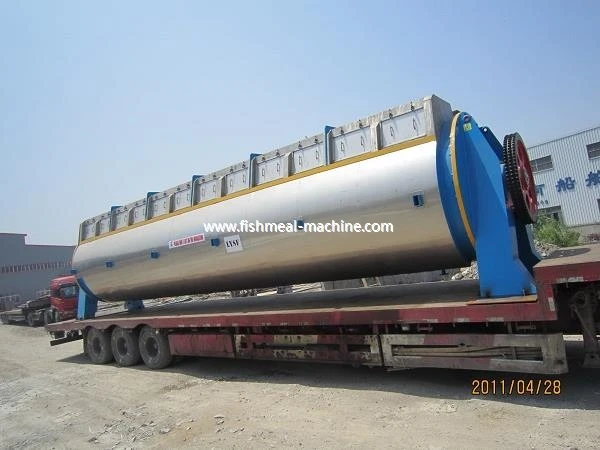
As a supplier of Fish Meal Steam Cookers, we've put a lot of effort into optimizing the steam flow pattern. Our cookers are designed to allow for both laminar and turbulent flow, depending on the specific needs of the customer.
We use advanced engineering techniques to control the steam inlet and outlet. By adjusting the size and shape of the steam channels, we can create the desired flow pattern. For example, if the customer wants to preserve the nutritional value of the fish meal, we can set up the cooker to generate a laminar flow. If a quick cooking process is required, we can switch to a turbulent flow mode.
Related Machinery
In addition to our Fish Meal Steam Cookers, we also offer other important machinery for fish meal plants. Check out our SUS304 Twin Screw Press For Fish Meal Plant. This press is great for separating the liquid and solid components of the cooked fish. It's made of high - quality SUS304 stainless steel, which is durable and resistant to corrosion.
Our Fish Meal Rotor Disc Dryer is another essential piece of equipment. After cooking and pressing, the fish meal needs to be dried to the right moisture level. This dryer uses steam to efficiently remove the remaining moisture, ensuring a high - quality end product.
And don't forget our Fish Meal Twin Screw Press. It's designed to handle large volumes of fish and can provide a high - pressure pressing process for better separation.
Conclusion
In conclusion, the steam flow pattern in fish meal cooking has a significant effect on the cooking quality. Whether it's the nutritional value, texture, or moisture content, the way the steam flows can make or break the final product. As a supplier, we're committed to providing the best solutions for our customers. We understand that different customers have different needs, and we're here to help you choose the right steam flow pattern and the right equipment for your fish meal plant.
If you're in the market for fish meal production equipment or want to learn more about how steam flow can affect your fish meal quality, don't hesitate to reach out. We're always happy to have a chat and discuss your specific requirements. Let's work together to produce the highest - quality fish meal!
References
- "Fish Meal Production Technology" by John Smith
- "Steam Flow Dynamics in Industrial Cooking Processes" by Emily Brown
- "The Impact of Cooking Methods on Nutritional Value of Animal Feed" by David Johnson