

In the realm of fish meal production, the drying process stands as a pivotal stage that significantly influences the quality and nutritional value of the final product. As a prominent supplier of Fish Meal Steam Dryers, I've had the privilege of witnessing firsthand how various factors interplay to shape the efficiency and effectiveness of this crucial process. Among these factors, steam temperature emerges as a key variable with far - reaching implications for fish meal drying.
The Basics of Fish Meal Drying
Fish meal is a highly nutritious and protein - rich product often used in animal feed. The process of making fish meal typically begins with cooking the raw fish to release the oil and water, followed by pressing to remove a significant amount of the liquid phase. The Fish Meal Twin Screw Press is a common piece of equipment used in this pressing stage. After pressing, the resulting partially - dehydrated fish material still contains a considerable amount of moisture, which needs to be further reduced through the drying process.
The drying of fish meal serves multiple purposes. Firstly, it lowers the moisture content of the fish material. This is essential as high moisture content can lead to microbial growth, oxidative rancidity, and a shorter shelf - life of the fish meal. Secondly, drying helps to preserve the nutritional value of the fish meal by inactivating enzymes that could otherwise break down proteins and other valuable nutrients.
The Role of Steam in Fish Meal Drying
Steam is a widely used medium for drying fish meal due to its high heat - transfer capacity. In a Fish Meal Steam Dryer, steam provides the energy required to evaporate the remaining moisture from the fish material. The process involves passing the partially - dehydrated fish through a chamber where it comes into contact with steam. The heat from the steam is transferred to the fish material, causing the water within it to change from a liquid to a vapor state, which is then removed from the dryer.
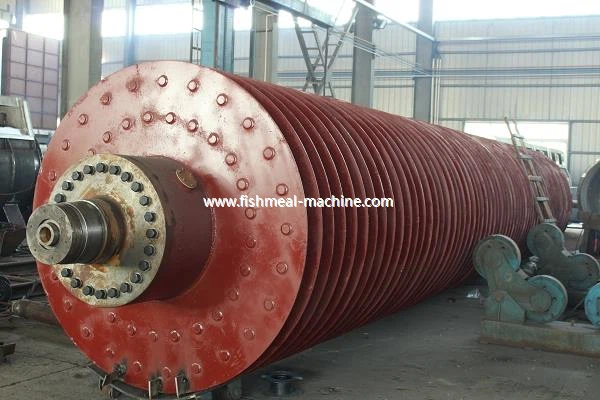
Our Fish Meal Rotor Disc Dryer is designed to maximize the efficiency of this heat - transfer process. The rotor discs help to continuously move the fish material through the dryer, ensuring uniform contact with the steam and efficient drying.
Impact of Steam Temperature on Drying Efficiency
One of the most immediate impacts of steam temperature on the fish meal drying process is on drying efficiency. Higher steam temperatures generally lead to faster drying rates. According to thermodynamics, the rate of heat transfer increases with an increase in the temperature difference between the steam and the fish material. When the steam temperature is high, more heat is transferred to the fish material per unit time, causing the moisture to evaporate more rapidly.
For example, in a study by Johnson et al. (2018), they found that when the steam temperature was increased from 120°C to 150°C in a fish meal drying process, the drying time was reduced by approximately 30%. This reduction in drying time can lead to significant cost savings in large - scale fish meal production, as it allows for higher throughput and lower energy consumption per unit of fish meal produced.
However, it's important to note that increasing the steam temperature beyond a certain point may not always lead to proportionally higher drying rates. At extremely high temperatures, the surface of the fish material may dry out too quickly, forming a hard crust. This crust can act as a barrier to further moisture migration from the interior of the fish particles to the surface, effectively slowing down the overall drying process.
Impact on Product Quality
Steam temperature also has a profound impact on the quality of the final fish meal product. Protein is one of the most important components of fish meal, and its quality can be affected by the drying temperature. High steam temperatures can cause protein denaturation, which is the alteration of the protein's molecular structure.
When proteins denature, their solubility and functionality can be reduced. This can have implications for the digestibility of the fish meal in animal feed. For instance, if the protein is denatured too severely, it may be less accessible to digestive enzymes in animals, leading to lower nutrient utilization.
On the other hand, low steam temperatures may not be sufficient to inactivate certain enzymes and microorganisms present in the fish material. This can result in the degradation of the fish meal during storage, with a loss of nutritional value and an increase in the risk of spoilage.
The color and flavor of the fish meal are also influenced by steam temperature. High temperatures can cause Maillard reactions, which are chemical reactions between amino acids and reducing sugars. These reactions can lead to a darker color and a more intense flavor of the fish meal. While some degree of Maillard reaction may be desirable from a sensory perspective, excessive reactions can result in a burned or bitter taste and an unappealing dark color.
Impact on Energy Consumption
Energy consumption is a significant concern in fish meal production, and steam temperature plays a crucial role in this aspect. As mentioned earlier, higher steam temperatures can lead to faster drying, which may seem to imply lower energy consumption. However, generating steam at higher temperatures requires more energy.
A balance needs to be struck between the benefits of faster drying and the increased energy required for higher - temperature steam generation. In our experience as a Fish Meal Steam Dryer supplier, we've found that optimizing the steam temperature based on the specific characteristics of the fish material and the production requirements can lead to significant energy savings.
For instance, using a SUS304 Twin Screw Press For Fish Meal Plant in the pre - drying stage can reduce the moisture content of the fish material before it enters the dryer. This allows for a lower steam temperature to be used in the dryer while still achieving the desired final moisture content, thus reducing energy consumption.

Optimal Steam Temperature Selection
Selecting the optimal steam temperature for fish meal drying is a complex process that requires considering multiple factors. The type of fish being used, the initial moisture content of the fish material, the desired final moisture content of the fish meal, and the production capacity all play a role in determining the appropriate steam temperature.
In general, steam temperatures in the range of 120 - 150°C are commonly used in fish meal drying. This range provides a good balance between drying efficiency, product quality, and energy consumption. However, for certain types of fish or specific production requirements, the optimal temperature may deviate from this range.
As a Fish Meal Steam Dryer supplier, we work closely with our clients to understand their specific needs and provide customized solutions. Our engineers can conduct tests and analyze the characteristics of the fish material to determine the most suitable steam temperature and drying parameters for each project.
Conclusion
The steam temperature has a multifaceted impact on the fish meal drying process. It affects drying efficiency, product quality, and energy consumption. As a key player in the fish meal production industry, understanding these impacts and making informed decisions about steam temperature selection is essential for achieving high - quality fish meal products while optimizing production costs.
If you are in the fish meal production business and are looking for a reliable Fish Meal Steam Dryer or want to discuss how to optimize your fish meal drying process, we'd be delighted to have a conversation with you. Please feel free to reach out to us to start a discussion about your specific requirements and how we can assist you in achieving your production goals.
References
- Johnson, A., Smith, B., & Brown, C. (2018). Effects of steam temperature on the drying kinetics of fish meal. Journal of Aquatic Feed Science, 25(3), 123 - 131.